
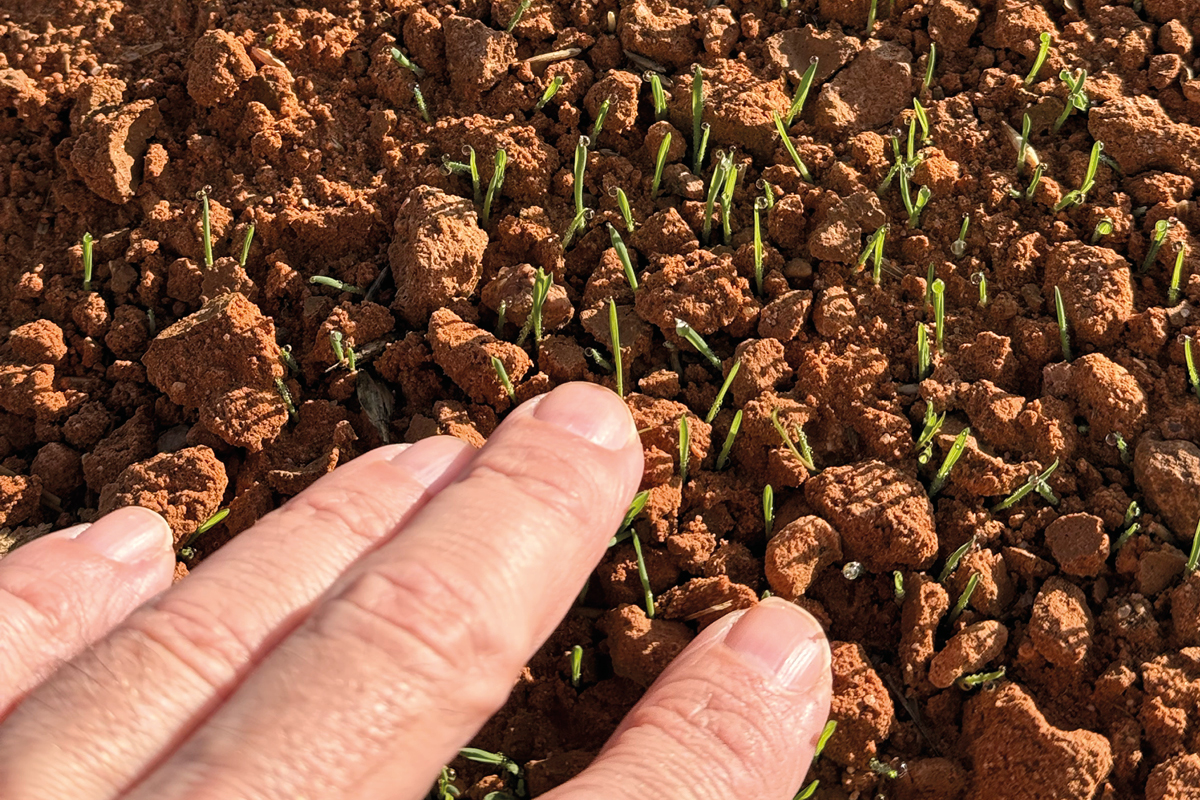
At Agrosemillas, we believe that real advances in cover crops lie in the nuances: small technical details that improve efficiency, reduce costs, and facilitate field management.
In this article, we review three specific characteristics of Green Series that make it a unique tool for woody crops and sustainability projects.
1. Adaptation to any unevenness of the terrain
Green Series has an exceptional capacity to establish itself in areas with slopes, embankments, and changes in level.
Its root structure and growth mode allow the cover crop to remain stable even on irregular surfaces, reducing erosion and improving water infiltration.
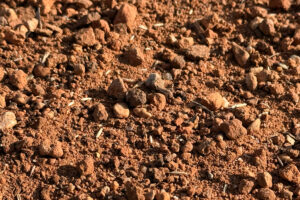
2. Establishment by surface sowing
One of its greatest advantages is that it does not need depth to develop correctly.
Surface sowing:
Reduces labor and working time
Improves the percentage of emergence
Facilitates establishment in difficult soils
Minimizes the risk of excessive burial after rains or machinery passes
This makes Green Series an ideal solution for farms seeking efficiency and simplicity.
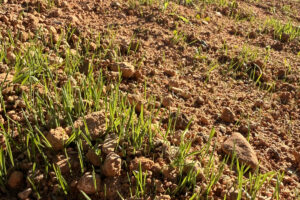
3. Resistance to the passage of heavy machinery
Green Series is designed to coexist with the farmer’s usual operations: tractors, implements, shredding of pruning remains, or treatments.
Its flexible structure and recovery capacity allow:
The cover crop is not destroyed after repeated passage of machinery
Maintain its soil coverage
Continue controlling weeds and protecting the land
This behavior is especially valued in woody crops such as pistachio, olive, almond, or vineyard.
A cover crop that goes further
These three aspects are only part of what makes Green Series unique: hardiness, self-seeding, low competition, and sustainability complete a proposal designed for the present and the future of regenerative agriculture.
At Agrosemillas, we continue working to ensure that every detail counts.
Trust, Cultivate, Grow.



Leave A Comment